
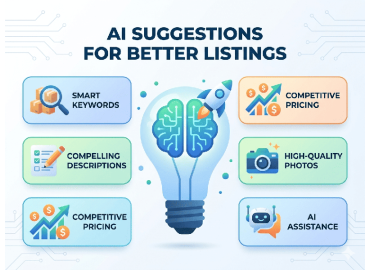
AI has shifted the focus of product listings from simple keyword matching to "Conversational Clarity" and "Structured Attributes." Whether you are optimizing for e-commerce marketplaces or digital classifieds, here are the top AI-driven suggestions for better listings.
1. Optimize for AI Search & LLMs (AIO)
Traditional SEO is being replaced by AI Optimization (AIO). Large Language Models (like Gemini and ChatGPT) and AI-powered search engines now "read" your listings to answer user questions directly.
- Conversational Titles: Move away from keyword stuffing. Instead of "Men's Blue Running Shoes Size 10," use "Lightweight Men's Blue Road Running Shoes for Marathon Training."
- Structured Data (Schema): Ensure every listing uses Schema.org markup. This helps AI agents instantly identify price, availability, and specific features to include you in "Top 10" comparison lists.
- FAQ Sections: Add a "Common Questions" section to each listing. AI uses these to pull direct answers when a user asks, "Is this camera good for low-light photography?"
2. Dynamic Content Generation
Using AI to draft listings saves time and maintains a consistent professional tone across hundreds of items.
- Benefit-First Descriptions: Use tools like Hypotenuse AI or Copy.ai to transform technical specs into benefits. Instead of "5000mAh battery," the AI should write, "Lasts for two days of heavy use without a charge."
- Platform-Specific Formatting: AI can instantly reformat a single product description into a punchy Amazon bullet list, a detailed WooCommerce page, or a short, urgent classified ad.
- Brand Voice Tuning: Set "Brand Personas" in your AI prompts (e.g., "Professional yet accessible") to ensure all listings sound cohesive even if generated at scale.
3. Visual & Multimodal Optimization
AI now "sees" your images to understand your product quality and context.
- AI-Enhanced Photography: Use tools like WizStudio or Photoroom to replace basic backgrounds with high-end lifestyle scenes (e.g., a watch on a wooden desk rather than a white background) for a fraction of the cost of a photoshoot.
- Descriptive Alt-Text: AI vision models use alt-text to categorize products. Be specific: "Ergonomic mesh office chair with lumbar support in charcoal gray."
- Virtual Try-Ons & AR: For 2026, integrating AR (Augmented Reality) via AI allows customers to see how a piece of furniture fits in their room, significantly reducing return rates.
4. Competitive Intelligence & Pricing
- Market Gap Analysis: Use AI to scan competitor listings and identify what they are missing. If competitors don't mention "warranty" or "eco-friendly packaging," make those the highlights of your listing.
- Dynamic Pricing: Implement AI agents that monitor market trends and competitor price drops in real-time, suggesting (or automatically applying) price adjustments to keep your listing at the top of "Best Value" filters.